How Many Amp-Hours Is a Power Station?
Amp-hours only mean something next to volts: amp-hours × volts = watt-hours, so compare power stations by watt-hours, or divide watt-hours by 12 to match a 12-volt battery.
Amp-hours only tell you how much a battery holds when you also know its volts. Multiply the two and you get watt-hours, and watt-hours are the number to compare power stations by.
Two boxes can both say "40 amp-hours" and hold very different amounts of power. This guide shows why, and how to turn any box into "12-volt amp-hours" if that is how you think about batteries.
Four words first
- Watt-hours: how much power a box holds.
- Watts: how fast something uses power.
- Amp-hours: another way to say how much a battery holds, counted at its own voltage.
- Volts: how hard the power pushes. Each battery pack has its own voltage, set by the maker.
If watt-hours are new to you, start with What is a watt-hour? and watts vs. watt-hours.
The one formula you need
Amp-hours × volts = watt-hours
Turn it around and you get the other way:
Watt-hours ÷ volts = amp-hours
That is all. The catch is the volts. Power station makers build their battery packs at different voltages, so their amp-hour numbers are not on the same scale.
Same amp-hours, very different boxes
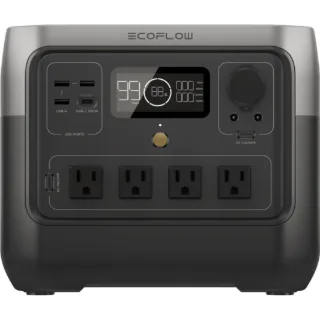
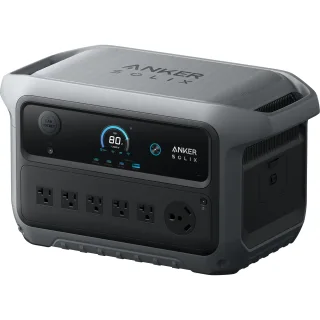
EcoFlow lists the RIVER 2 Pro at 40 amp-hours at 19.2 volts. That is 768 Wh. Anker lists the SOLIX C2000 Gen 2 at 40 amp-hours too, but at 51.2 volts. That is 2,048 Wh.
Same "40 amp-hours." One holds well over twice as much power as the other. If you shopped by amp-hours alone, you would think they were the same size.
So when you see amp-hours on a spec sheet, look for the volts right next to it. If there are no volts, the amp-hour number does not help you compare.
Amp-hours of 7 boxes we list
The first two number columns are what each maker publishes. The last column is our own math: watt-hours ÷ 12, rounded. It tells you how the box compares to a 12-volt battery.
| Box | Watt-hours | Maker's amp-hours | About amp-hours at 12 volts |
|---|---|---|---|
| EcoFlow RIVER 2 Pro | 768 Wh | 40 Ah at 19.2 V | about 64 |
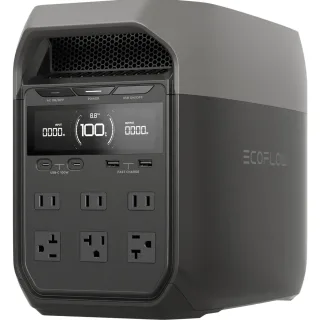
| EcoFlow DELTA 3 | 1,024 Wh | 20 Ah at 51.2 V | about 85 |
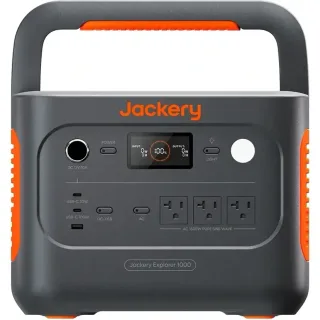
| Jackery Explorer 1000 v2 | 1,070 Wh | 30.4 Ah at 35.2 V | about 89 |
| Jackery Explorer 2000 v2 | 2,042 Wh | 45.6 Ah at 44.8 V | about 170 |
| Anker SOLIX C2000 Gen 2 | 2,048 Wh | 40 Ah at 51.2 V | about 171 |
| Jackery HomePower 3000 | 3,072 Wh | 60 Ah at 51.2 V | about 256 |
| EcoFlow DELTA Pro 3 | 4,096 Wh | 80 Ah at 51.2 V | about 341 |
Look at the DELTA 3 and the RIVER 2 Pro. The DELTA 3 lists only 20 amp-hours, half of the RIVER 2 Pro. Yet it holds more power, because its pack runs at 51.2 volts.
If you think in 12-volt batteries
Many people know batteries from cars, boats and RVs. Most of those are 12-volt batteries, and they are sold by amp-hours. To compare one of them to a power station, put both in watt-hours.
100 Ah × 12 V = 1,200 Wh
So a 12-volt battery sold as 100 amp-hours holds about 1,200 watt-hours, by our math. The closest boxes we list are the BLUETTI AC180 at 1,152 Wh, the Jackery Explorer 1000 v2 at 1,070 Wh and the EcoFlow DELTA 3 at 1,024 Wh. We point to the DELTA 3 below because EcoFlow publishes both its amp-hours and its volts, so you can check the math yourself. How much of a 12-volt battery you can really use depends on its type and its maker. Check the maker's sheet for that battery.
What really tells you how long it runs
Amp-hours, watt-hours and volts all describe how much a box holds. To know how long it runs your things, you also need the watts of each thing. This is the math we use in Find My Power and Compare:
Watt-hours × 0.85 ÷ watts = hours
We keep 85% because some power is lost inside the box. For a 120-watt fridge on the DELTA 3, that is about 7.3 hours by our math. Estimates. Your devices may use more or less.
Want your own number? Pick your things in Find My Power. Or put two boxes side by side in Compare.
Tips before you compare
- Use watt-hours, not amp-hours, to compare two power stations.
- If a sheet shows amp-hours, find the volts in the same line. One without the other does not help.
- Do not trust the number in the name. "1000" or "2000" in a name is often not the exact watt-hours.
- To compare with a 12-volt battery, divide the box's watt-hours by 12.
- Read the maker's own page, not a store listing. That is where we check every number.
All the boxes above have their own page with run times and specs in Best Picks.
Questions people ask
How many amp-hours is a 1,000 watt-hour power station?
It depends on its volts. At 51.2 volts it is about 20 amp-hours. Counted at 12 volts, it is about 83 amp-hours, by our math.
Is more amp-hours always better?
Only when the volts are the same. The DELTA 3 lists fewer amp-hours than the RIVER 2 Pro but holds more watt-hours.
Why don't all makers list amp-hours?
Some only publish watt-hours. Watt-hours already include the volts, so they are the fair way to compare. When a maker does not list amp-hours, the box's page shows only our own 12-volt math.
How long will a 100 amp-hour, 12-volt battery's worth of power run a fridge?
About 1,200 watt-hours × 0.85 ÷ 120 watts, or about 8.5 hours, by our math. Estimates. Your devices may use more or less.
Estimates. Your devices may use more or less. As an Amazon Associate I earn from qualifying purchases. Made with AI tools for research and drafting. A second AI check compares the numbers with the sources linked on this page. Samuel Guerra reviews every guide before it goes live.